Post singularity, does the green bird live?
Is Duolingo Coca Cola? Or is it Chegg?

Nothing below is investment advice or a suggestion to buy securities which you should do under the guidance of a financial adviser. The general market consensus is that Duolingo is a 0, as in, literally every dollar you invest in the company is going to get lit on fire.
DUOLINGO at $112.50 a share might just be a fat pitch. It is the same as Meta at $90 and Google at $160 and people who say its not don’t know what it felt like buying those spots.
People act like Meta at $90 was easy. It was not easy. Apple literally said ‘we are going to war with your business’ and Facebook said ‘prob gonna cost us at least 10 billion in rev this year’.
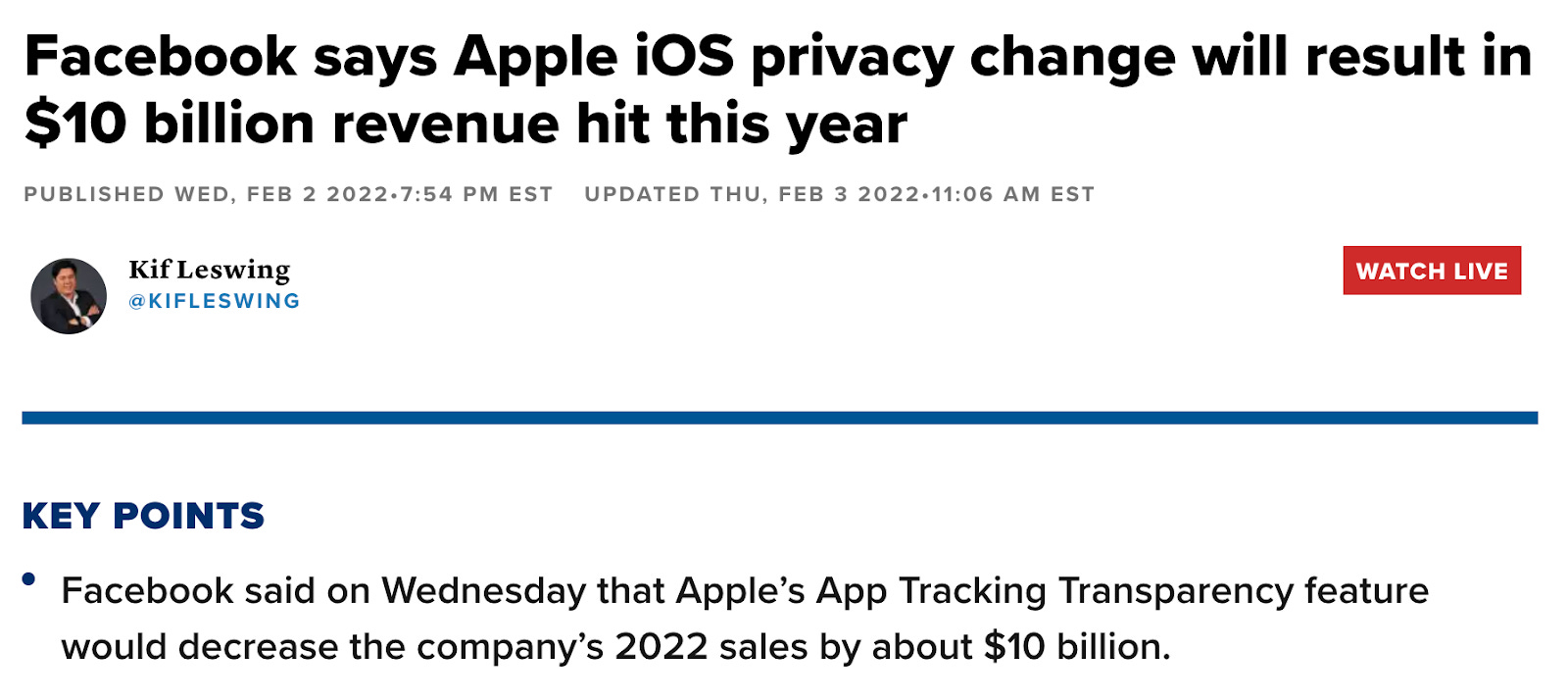
People act like Google at $160 was obvious. It was not, this was literally every article in the news.

And earnings calls:
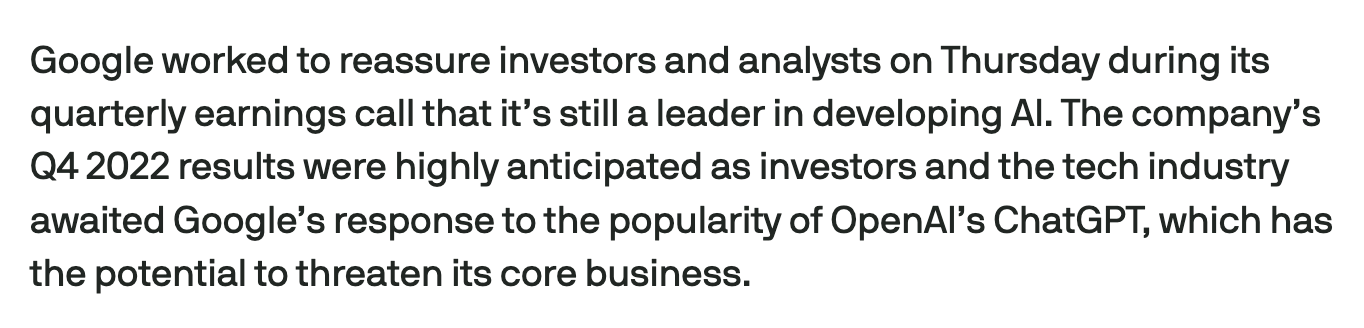
Today people don’t talk about this much. The data won - Google Search had seen no decline when these articles were written - now, Search has actually accelerated, from 10% to 17%, as of last earnings call. Not only did Search survive, but Google’s deep AI bench, between Demis Hassabis, Jeff Dean, Noam Shazeer, and so many others, showed that Google would actually be a major winner in an AI heavy future. This “AI loser to AI winner” narrative is a key mental model right now. If you can deduce who will win post-AI, you will make a lot of money. Get it wrong? Some companies will get cut in half again, even from here (in my own portfolio, $GTLB at $20 and $DUOL at $60 are unlikely but possible occurrences if you truly believe AI is just going to eat everything).
Today people view Google as an enviable vertically integrated hyperscaler, the cleanest play on AI, with their own top 3 frontier model, the best infrastructure, a highly competitive hardware product, and even a major equity stake in one of the other top 3 frontier model providers (who they also provide a huge amount of Cloud infra to). The other players have real warts, between OpenAI’s Microsoft marriage/divorce, Anthropic’s reliance on third party compute and less significant funding and Meta’s lack of a cloud business to monetize their infrastructure.
But at the time, it did not feel like that. I know, because i bought both spots. It was scary at the time. I distinctly remember valuing Facebook Marketplace, because at $90 a share, it seemed like part of minimizing the “max pain outcome” was that Marketplace was a real cash cow and had no exposure to the iOS privacy changes - even if it was small. With regard to Google, i had many conversations with smart friends about the spot. Most did not like it. “OpenAI is going to kill everything” was consensus. I just had to keep telling myself, Google is incredibly well positioned in AI just listen to Jeff Dean talk for 5 min (if you watched Noam and Jeff Dean on Dwarkesh you should have been quite bullish). And Search is growing 10% a year currently - ChatGPT3 was released ages ago, why aren’t we already seeing pain?
Duolingo is distressed but the numbers don’t show it
Why is Duolingo like this? After all, these were two of the biggest companies in the world. Duolingo is a 5b market cap EdTech company with a Green Bird as a mascot and an ‘unhinged’ (ceo’s own description) social media strategy.
Well, it is the same disruption story. I see four distinct narratives, and I will go over each.
The Chegg Narrative: “All software will be the chatgpt input box - Look at Chegg”.
The “No more second languages” narrative: “No one will ever learn languages again because of AI” (the stock somehow found yet another leg down when T-Mobile announced they would let you do live translation on a call).
The “Someone will vibecode Duolingo and this will destroy margins” narrative.
The “Duolingo is not good for learning” narrative.
I am going to address each of these narratives in a minute - once again, like with META and GOOG, they are legitimate fears. I am very long DUOL, but I am clear eyed about the potential disruption. I don’t think I am betting on a rising tide (maybe a key flaw of mine as an investor in the current market!). DUOL is obviously contrarian here.
The good
First lets take a look at why Duolingo used to trade at a massive premium (well above $500 a share).
Massive earnings inflection
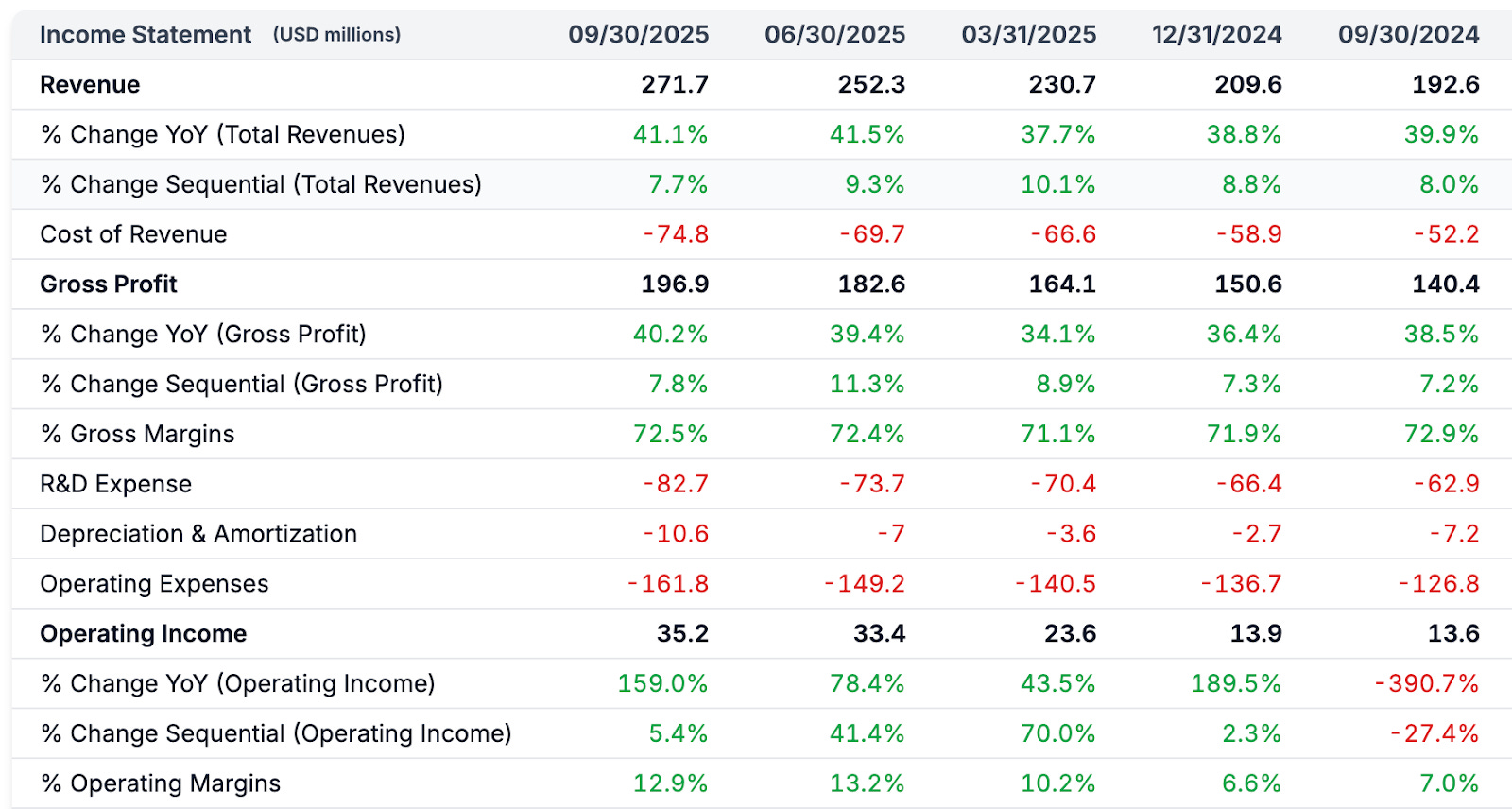
Duolingo has some of the hardest inflecting numbers possible. Growing revenue 41% YoY lead to a 159% gain in operating income. There’s no sneaky trick in these numbers, incremental revenue from significant user growth makes operating margins explode. And it seems like at least some growth going forward, both in total users, and in terms of paying users, seems incredibly likely. This is partially a result of insanely high retention - when you retain users for over 10 years, each cohort is additive (how Meta seems to just never stop growing).
Interestingly, TIKR actually had the wrong number for operating income (showing 39m) - a small victory for my app ALPHAPORT.AI. I was worried I had found a bug (ALPHAPORT RESEARCH is still beta), but since ALPHAPORT lets you click any number to see the source document, I just clicked it and was surprised - DUOLINGO is a pretty big company!
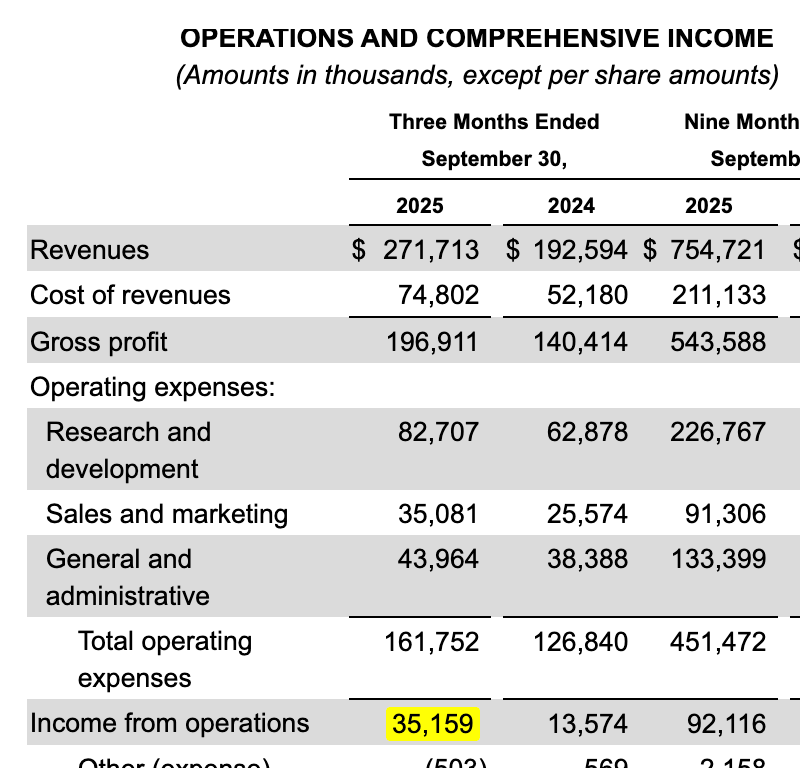
Anyway, ALPHAPORT RESEARCH is $10 a month, but i digress.
The important thing to really understand here is that a company trading at a clean 30x earnings does not need to grow earnings 40% a year to work.
If we grow revenue at 25% a year, in 5 years we will have tripled earnings (and would thus have a PE of 10, but probably maintain a 30x multiple in this outcome - eg we would 3x in 5 years).
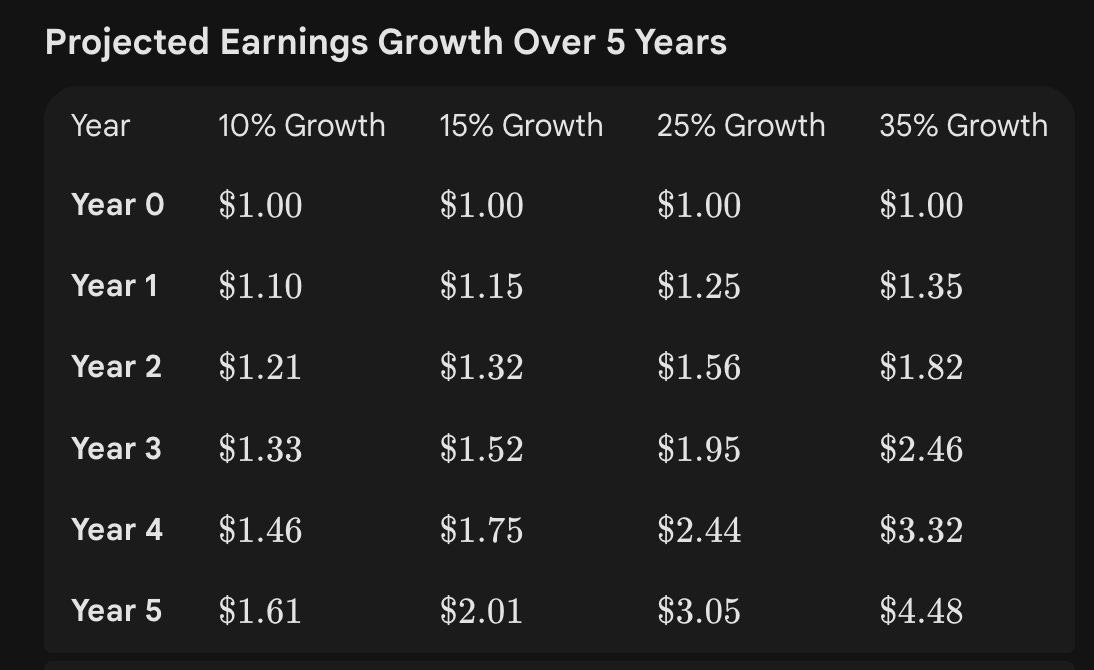
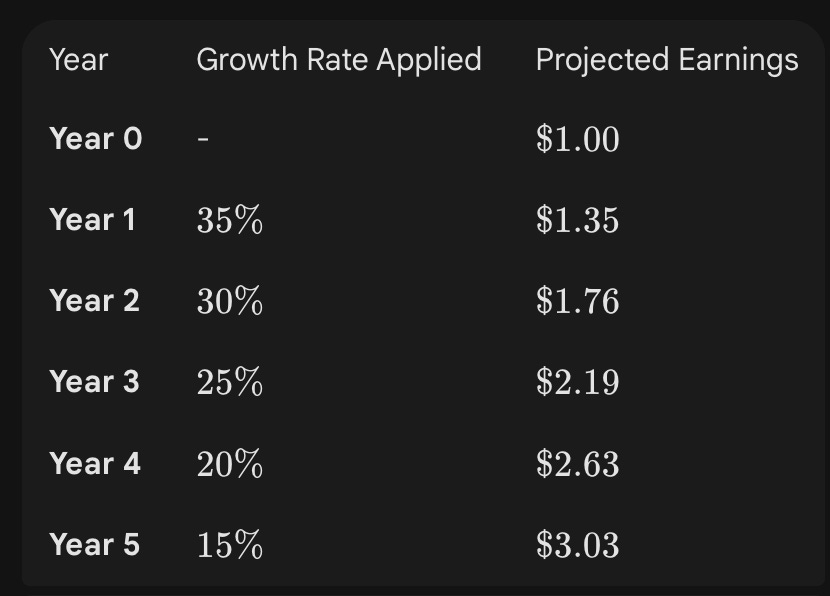
Assuming some level of decay, we get a similar result to 5 years of consistent 25% growth, tripling projected earnings in 5 years. In this situation however, we probably do not maintain the 30x multiple. I would say probably we would get a 23-25x multiple in this instance, for a 2.2-2.5x.
These numbers are actually conservative however. As you can see from the earning table of Duolingo’s numbers, because Duolingo is operating at massive scale (>500m user accounts, 135m MAU and 50m DAU), almost all revenue is accretive to earnings. Growing revenue at 25% a year will do more than increase earnings by 25%.
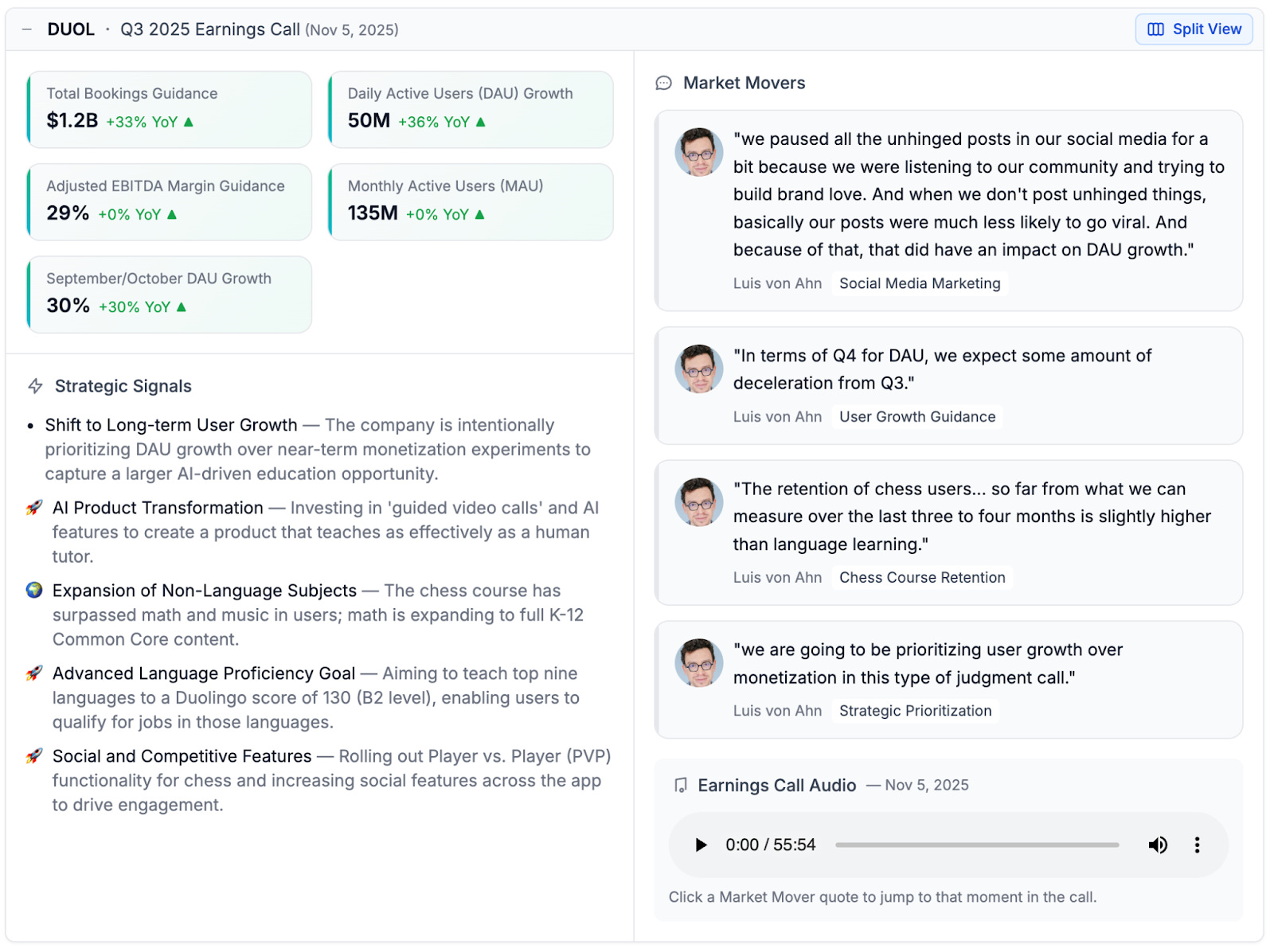
Ok, so we get it. Growing really fast at scale means you have massively inflecting earnings and that is good.
Why do I think this will continue?
Management said they will be an AI winner and it is obvious to me that they will be.
Let’s discuss.
Duolingo is like Chegg - ChatGPT is just a better product
The first narrative is that Duolingo is like Chegg, and that people will simply use the ChatGPT input box for everything. I don’t really get this. I am an extreme AI power user. I used ChatGPT4 all day every day once it came out. I have probably done well over 1000 Deep Research requests. In my day to day work, I often have 7 agent tabs open helping me work on things. I’m proficient with OpenClaw and just built a trading bot with it.
I’m also a language enthusiast - I studied Chinese and German at University. I lived in Montreal for 8 years. I’ve travelled to Japan at least 10 times, and had a tutor who came over to my apartment once a week to help me learn. I then went and studied in Japan for a month, doing 4 hour morning classes.
I have literally, not even once, asked ChatGPT to help me learn a language. Never. I had to really think about this, like, surely once I asked it a question? No. I racked my brain, and I have never done anything related to language learning with ChatGPT.
Ok, but what if it was REALLY good.
Well, how good?
What does DUOLINGO driven AI disruption really look like?
Lets imagine a scenario where Apple ships AR glasses (coming 2027 imo), and i can talk to Gemini with them. I can conjure anything I want, my own language tutor. What’s the thinking here? I’m going to say “Hey Gemini, create me an AR language tutor to teach me French. No, maybe more like, i don’t know, a penguin robot. Sweet! Ok he’s my personal tutor. Ok. Construct a language course. Retain all the information from that. Let’s talk about difficulty (or maybe it prompts me to ask how hard i want it to be?).
Is the AI just going to do it all perfectly? How? How does it know what pedagogy is optimal? Is the character I come up with, the personalized, generate any avatar I want thing, really going to be better than what Duolingo’s design team came up with?
You might say Duolingo’s designs are simple and easy to imitate but I recently started learning Korean on the app to dog food this thesis a bit more (i hadn’t used it since I left Montreal) and I will tell you, my 2.5 year old daughter always wants to sit next to me when I learn. She will just keeps saying KOREAN, KOREAN, KOREAN, and when I load up the app and do a lesson, when i get an answer right, the characters animate and look happy. She then screams HAPPYYYYYYY. That shit doesn’t happen on accident.
I did a quick call with Falstaff the bear to practice ordering some Japchae, and when I hung up i went on to the next lesson, she was like CALL FALSTAFF AGAIN. CALL FALSTAFF. I had to go back and do the lesson again to mollify her.

I might need to cut her off from watching soon, seriously its that bad.
And isn’t this all kind of… a lot of effort? Wouldn’t it be WAY better for Apple if i just said ‘Hey siri, load Duolingo, i want to do some lessons’ and up popped Duolingo, which was a branded value added wrapper around the service? (eg Gemini is still getting money from API usage through Siri, and OpenAI is getting money since Duolingo is partially powered by ChatGPT?). Doesn’t Apple just want me to summon the bird in AR? Why do they want to deal with me creating a whole new app using voice AI?
What’s the alternative here, that they integrate Gemini into Siri, and then you just use Gemini as every app in the world? They have the most profitable platform in tech with the best ecosystem lock in ever, and they just say ‘lets kill that and let Google own all of it?’
I don’t see it.
The disruptor - OpenAI don’t care about app
Ok, so Apple is just going to stick with Apps. What about OpenAI?
You could make an argument that OpenAI will ship their listening obelisk, and the seamless chats you can have with it in any language will be superior to anything that Duolingo comes up with. Where Apple says ‘we want your apps’, OpenAI says ‘the AI is the one and only app you will ever need’.
This is a stronger argument because OpenAI is the challenger - they just want every user in the world to subscribe to ChatGPT and buy their pendant. If every other software company in the world dies as a result, they couldn’t care less. They don’t have The Apple App Store to defend.
But again - I just think App platform wins. Where platform means “other companies are making money”.
There is always going to be room for humans to add more value on top of the AI service and use the AI as a launcher. At the end of the day, SOMEONE has to do evals - either someone at OpenAI is seeing what it looks like to just chat to ChatGPT and get it to create something like Duolingo on the fly (these language learner evaluators need to have the same level of competency as the Duolingo employees or it won’t work), or it makes more sense simply to provide the optimal platform to launch these apps, and also provide the frontier model API that powers them.
To me, this is the right strategy - launch Duolingo from within ChatGPT. And OpenAI also handles any API requests it wants to make.
I could be wrong.
But the point i’m trying to make is that if you believe in disruption from AI here, you are basically taking the position that the Apple App Store (and any other 3rd party app store) is not going to be part of the future computing paradigm. A corollary to this I believe - if you think there will be no Duolingo in the App Store, you’re also making a statement that Netflix will ONLY be AI content, that a specific product (rather than a 100% tailored generative one) has no value.
I don’t see it. I think there will be human made content, AI made content, and UGC (YouTube). I think the AI will be able to do generative app-like things, but also load apps made by teams (these teams will heavily use AI, so the lines will blur).
Just as UGC dramatically increased the surface area of original content, AI will do the same. Will this lead to consolidation in the existing ecosystem? 100%. I would not want to be the 24th best EdTech app in the Apple App Store.
But when there is disruption, it pays to be Number 1.
AI will kill all language learning
This is a great view for people to have if you are a “Distressed Duolingo” investor, because it shows that a lot of market participants just don’t understand how the world, or Duolingo, works.
A huge amount of Duolingo users are learning English as a second language. This has a direct affect on their income - they can work at a bar for tourists or a hotel if they speak English in their native country. They can get a job overseas eventually. They can attend University in America. They might eventually get their skills high enough to be able to work at a FANG company on a Visa.
Do you really think ANY of these opportunities exist for people using Babblefish-style Earbuds?
You want to get a job at the Four Seasons in Mumbai and when you submit your resume you just put “use airpods for translation” under “Do you speak English”? Your latina gf’s mum asks you if you speak Spanish and you say “si” then pop in your headphones? Seriously?
Touch grass.
Making languages more easily learned with AI will lead to people interacting with diverse cultures MORE, not LESS. It will always be high status to actually know the other language, and with English specifically, it will be an absolute requirement. The world is competitive and you will be paid more if you know English. No surprise that the second biggest country for Duolingo is now China.
Someone will vibe code a competitor
This is another popular take. There’s so many people out there who have vibe coded their first few apps, and think they now know what it takes to make at-scale software. Most of it remains unshipped. If people don’t instantly get traction on their app, they give up. Marketing skills are non existent. Few that have shipped have actually maintained an app with users for any amount of time. These are usually solitary programmers (or vertical specialists) empowered with AI - but the thing is, the best apps will still have many people on their teams.
Just as there was a massive glut in the cannabis industry as regulatory barriers were removed (eventually leading to rolling bankruptcies and significant consolidation), this is what is happening in consumer software.
There is a monstrous amount of duplication (or really, 100lication). There is going to be ‘bankruptcy’ (or just solo devs giving up) and consolidation. I know, because my own app, ALPHAPORT.AI has a solid amount of traction - plenty of users use it to track their portfolio. The research feature is getting increasingly powerful. But I work ALL THE TIME. Literally every day until midnight. And success at scale is hardly guaranteed - the space is increasingly flooded with competitors each picking their own niche to grow from - it is a daily battle to ship features fast enough to not get left in the dust. Larger players in the space are hiring more people, not less. And most these teams are in-person - they understand that a highly coordinated team of people empowered by AI and working in person is going to beat a solo vibe coder and they are investing in their products because they know people will also pay up for something that is just a little bit better.
I just focus on making the tools as good as possible for my own investment research and figure that will provide people with an affordable and quality solution, especially retail investors. But I believe in time we will see that people are acting like they can compete with Coca Cola because they just learned it was made primarily from water and sugar.
Lets look at a potential competitor to Duolingo that actually IS doing ok - Airlearn.
Airlearn
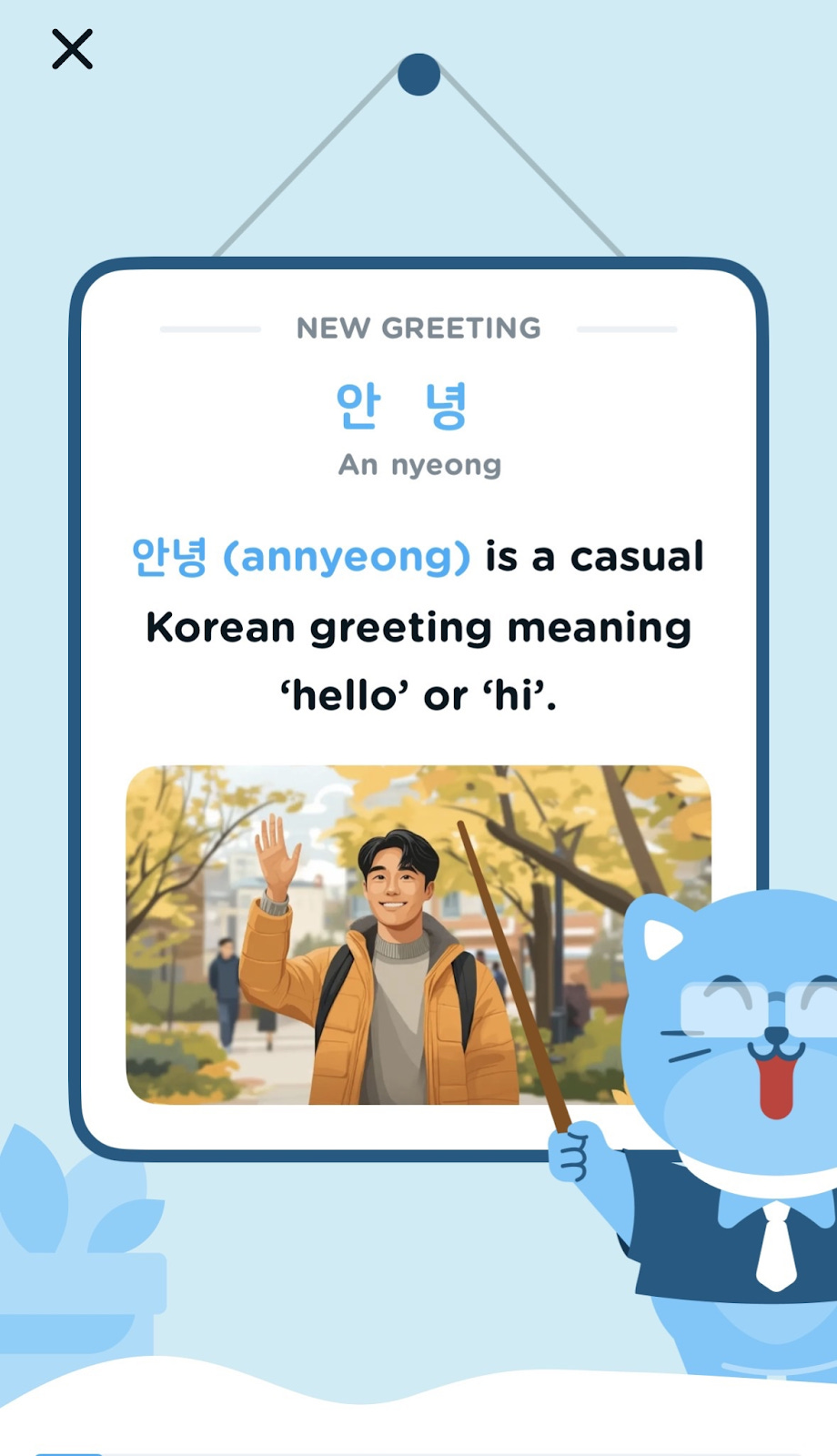
My first criticisms are:
This cat mascot does not look good.
The language lessons don’t actually use the aesthetic of the cat, they’re just AI generated people.
The style is inconsistent, the onboarding flow is bad. I have to read? This doesn’t feel like it is app native.
The product is worse. But still, it has 30,000 ratings, with an average rating of 4.8. It’s #39 in the education charts. So, it’s a thing.
Airlearn has no social network
But after signing up, I find this quite damning:
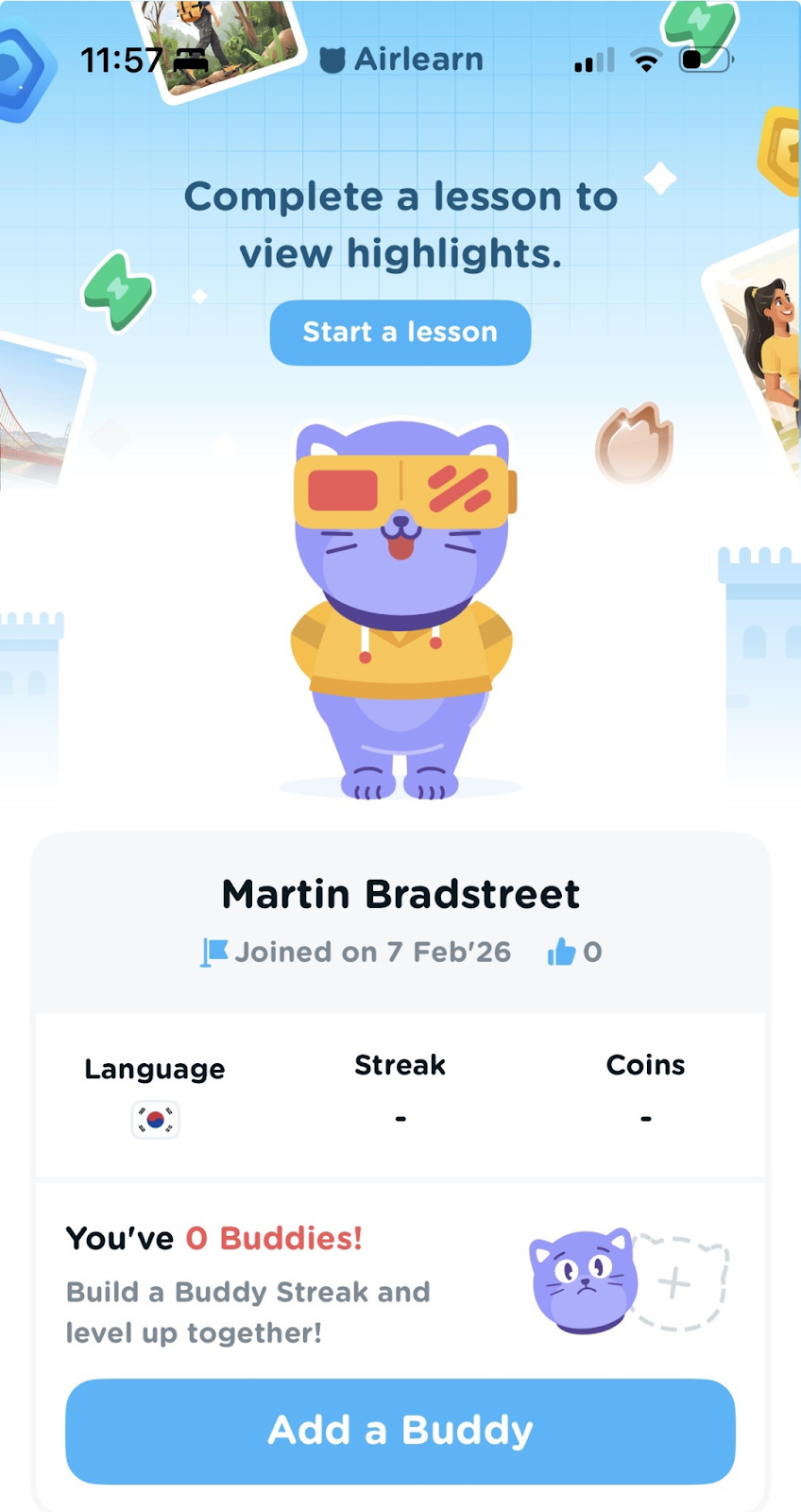
I have no buddies. I have no streak. No history.
Recently i logged into Duolingo again to learn Korean - I hadn’t used the app in about 4 years. Immediately I could see one guy who I used to play in a band with grinding lessons daily. His dad was also using the app. And some other people from our social circle. Some of them liked my automatic post, when i finished doing a lesson. Another one liked that I played a game of chess. We used to play chess together. That was a nice memory. Perhaps we will play some PvP chess on Duolingo soon.
This social dynamic is massively underrated imo.
So again - why would i ever switch? I am drinking Coca Cola. My friends are drinking Coca Cola. Sometimes we meet up to drink Coca Cola and say things like ‘mmm, Coke’. Why would we ever switch to a vibe coded beverage? Life is hard and complicated. Now I have to A-B test a bunch of other beverages?
People will say you just have to reach out and grab something off the shelf - switching friction is literally 0 - and yet the number one brand has maintained its position for a century.
But Duolingo is actually way stickier than just grabbing a Pepsi - if i switch to another language learning app, i’ll never see my friends activity again. I will have to find my place in my language journey again. It actually requires time and effort to switch. I don’t want to. My friends don’t want to. The competitor solution needs to be significantly better.
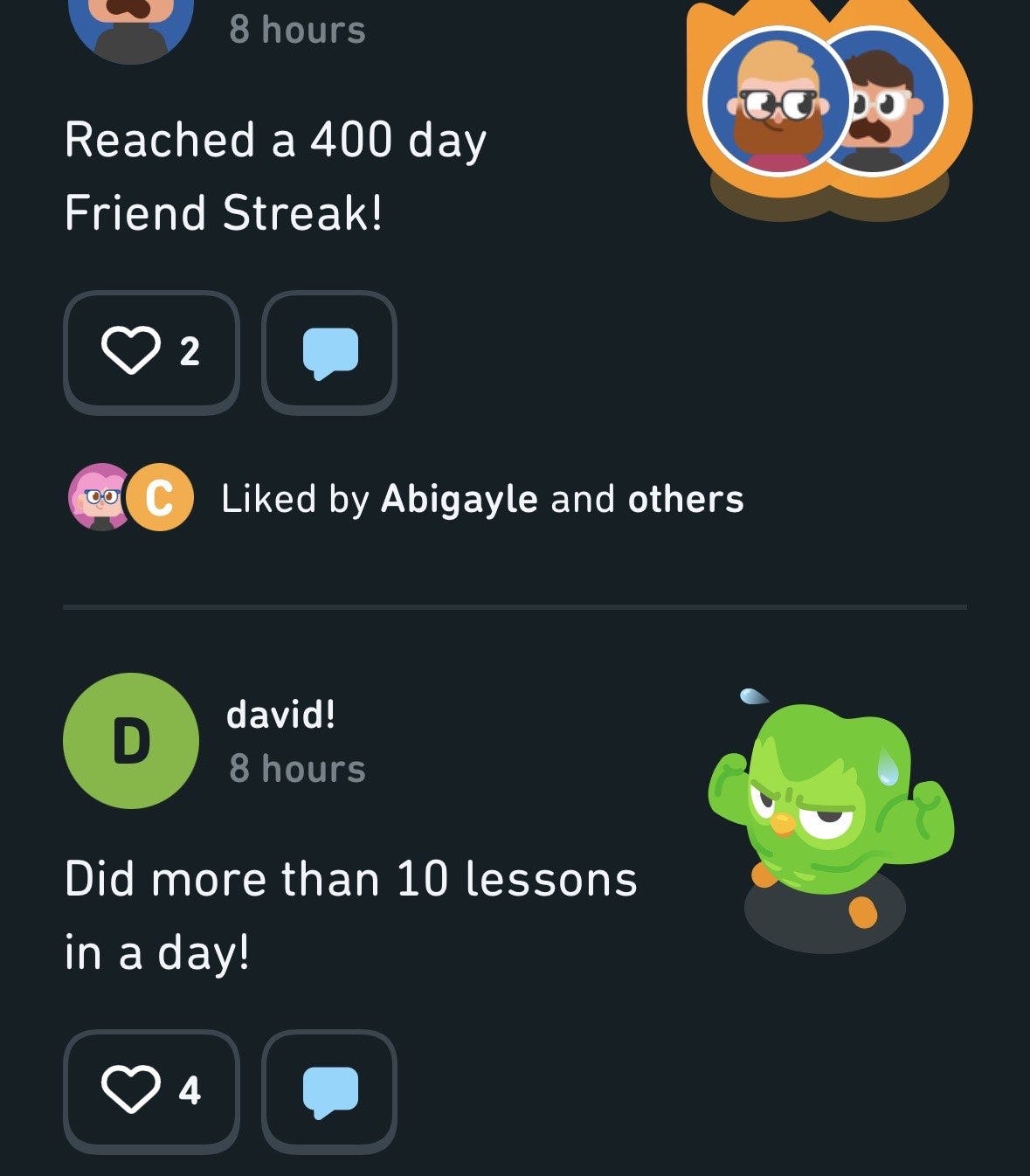
Friends i haven’t seen for a while are grinding Duolingo hard! It was a delight to see this! Probably we will play some chess at some point on the app?
Duolingo has gamified retention methods - as i mentioned before, literally 10 million users have logged in every single day for a year straight. That is absurd to me. If those users are worth $100 a year each in revenue, that gives you core revenue of 1 billion a year straight away. Keep in mind we have 50m DAU, 135m MAU, 500m total users, and we get >300,000 new downloads every single day. You think these guys are going to switch to a slightly better product? It needs to be WAY better to get you to switch, not a little bit better - and why would it be better?
Alt data has us continuing to see our consistent daily 300,000 downloads per day (thats >100m a year) - if disruption is coming, it’s not in view yet. In this way, it feels a little like Google Search. It’s not impossible that at some point it is disrupted, or that a whole new paradigm replaces it. But for now, the narrative does not line up with the reality - and by the time it does, who is to say that Duolingo won’t win in the new paradigm too (just like Google seems likely to do, leading to a significant repricing).
The Duolingo value proposition
I think one issue people have with Duolingo is that they are not the main customers. If i had to guess, there are three main users:
The biggest user is just someone trying to learn English as a second language, and Duolingo has worked to reinforce its position/moat in this space. The Duolingo English Test is scored on a 10–160 scale, evaluating proficiency in reading, writing, listening, and speaking. Results are AI-scored, usually available in 2 days, and aligned with the CEFR, with scores of 120+ generally indicating advanced proficiency.
CEFR is all you need to get into Stanford. “Stanford University accepts the Duolingo English Test (DET) for undergraduate admission as a measure of English proficiency”.
Millennial woman - a huge amount of the staff at Duolingo are women. If you want to understand retention of this group and are married, perhaps tell your partner that you’ve decided the NYT is too expensive for her to just play Wordle on. Someone has vibe coded an ‘almost as good’ version and it’s only $10 a month, not $40, so she should play that version. Go on, go do that.
Children.
Duolingo is not expensive for the value it provides, especially to the biggest group of users - people learning English as a second language so that they can get a job - or the second biggest group of users - immigrants learning the local language of a country they moved to (an interesting point that Duolingo CEO Luis von Ahn pointed out is that the most common first language to learn in Sweden is Swedish - but it is also the most common second language to learn - and this is the same in most countries).
Duolingo is not good for actually learning a language.
Despite what critics say, Duolingo is actually pretty solid for learning and gets better every day. The big unlock has been voice chat with avatars, Lily, and Falstaff.
As I mentioned earlier, I used to do japanese language lessons with a tutor.
There’s really two key things for learning a language, and thats saying the words out loud, and doing it every day. Duolingo has had daily usage on lockdown for a long time (10m of their users have streaks over 365 days in a row, quite a staggering statistic).
But until now, practice speaking has been limited to getting the phone to recognize occasional words. With the AI avatars, you can now call one up on the phone and just chat in the new language. This is a huge unlock. And importantly, it is a complex problem with an extremely high scope for it to be good. Duolingo is not the only app where you can chat to avatars, but over time, this is a legitimate area where 1st party data will help.
After a conversation, all sentences you spoke in the session are saved. The session can then be used to improve the AI. And these chat sessions can be used as a way of eventually turning Duolingo into the best AI learning app.
ChatGPT and Gemini both might try to compete directly in this area over time rather than encouraging app based ecosystems (as i mentioned above, i could see it going either way).
But Apple will always want Duolingo to do well because they want the app store to do well. And again - at some point, someone, somewhere needs to be doing evals. It might be at the frontier model providers offices, or it might be at the app makers offices, but really what we’re talking about is competition, not replacement - will the app layer wrapped around the LLM outcompete the straight LLM? I think it will. This idea that the frontier labs are just going to get all the best people in the world and build every app out there by training the models to generate something like the existing apps but better just seems… not very platformy?
Ok but they are? You can do language lessons in Google Translate now! Duolingo is a 0!
Again - Maybe.
But here’s what that app looks like today
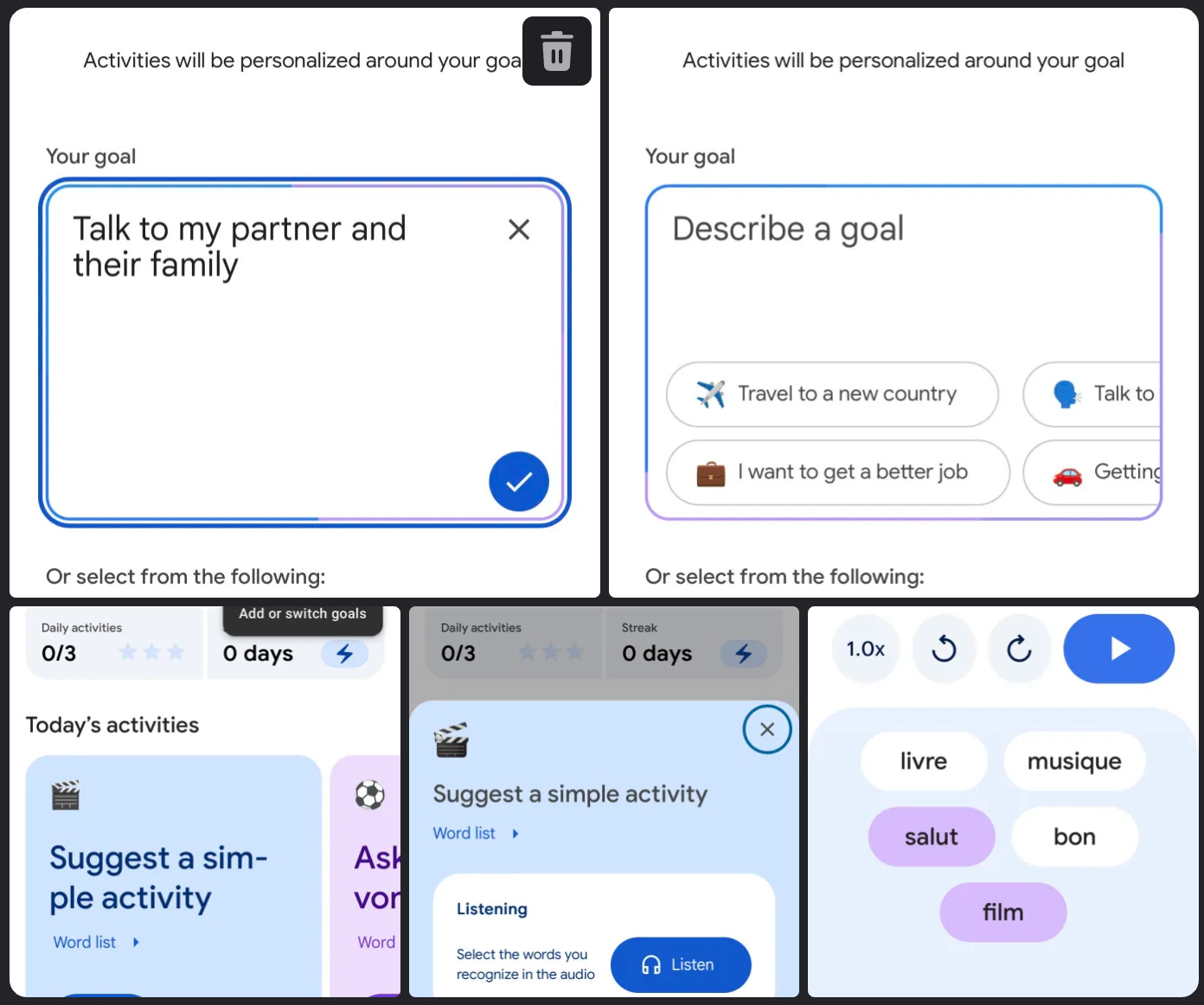
I tried it out and it suuuuucks. It is not fun. I have to put in a bunch of information to customize it to my learning to get into a lesson. And then it’s basically flash cards. There is lag. The voice is better than Duolingo, and this is the strongest argument in favour of the ‘Google eats all of it’ narrative, that the frontier model provider will just provide a core experience that makes any human touch feel clunky. Afterall, we all use iPhones, not 50 different styled artsy fashion devices. But right now, this app sucks.
And perhaps more importantly, I don’t want it to be good! I don’t want to use another app. I don’t want to tell my friends “this other app is 5% better than the one we use, we should all switch”. I don’t want to restart learning Korean with some Google Service.
But i don’t know. It just feels kind of like techno-communism. Every experience looks like Gmail but it will all be so good and low friction that you won’t care.
I just believe LLM wrappers with their own first party data and vertical marketing teams beat this.
That is ultimately the bet you are making with Duolingo. If I am right, $300 a share seems highly likely within the next year for a 167% return. If i am wrong, -50% even from here is not impossible.
The EV says we don’t need to be right more than half the time for this to be a great return. And I think we are right more than that. But the market is saying “nope, you should have just bought more Google, Martin”.
Just like Facebook at 90 and Google at 160, it is scary. I have similar thoughts regarding GitLab’s importance in the LLM workflow - and Anthropic just sent that stock tumbling -10% in day, with their new security features - on top of an already large loss. I am wrong sometimes.
But one thing is clear to me - there will be winners and losers, consolidation, and disruption - the question is just which specific names will come out ahead in the new world. For now, I am betting on Duolingo, crazy though it may be.
A friend has like a 2,000 day streak and has paid $0 to Duolingo as a customer. I signed up for a 7 day free trial on Babbel... forgot to cancel and was charged $80 bucks for an app I used maybe twice. Babbel Customer LTV > Duolingo.
it’s interesting mgmt is improving social aspect in the app quite quickly